
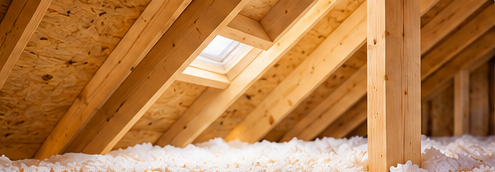
Different Symptoms Can Have Related Causes.
Rooms that are difficult to keep comfortable can be affected by solar exposure, attic and wall insulation, gaps around openings, airflow, ductwork, and other conditions. Moisture may show up as staining, musty areas, damp materials, or recurring issues around vulnerable exterior details. A worn roof or siding system may be primarily a weather-protection concern but could also be worth discussing alongside insulation or ventilation upgrades.
No single product is right for every home. An appropriate assessment considers the actual conditions and avoids assuming the answer before the problem is understood.
The Building Blocks of Home Performance.
Insulation
Properly selected and installed insulation helps resist heat transfer through parts of the building enclosure. The appropriate type and amount depend on the home.
Air Sealing
Uncontrolled air leakage can contribute to drafts and energy waste. Sealing appropriate gaps and openings may be a useful part of a broader improvement plan.
Ventilation
A home's ventilation strategy needs to consider healthy air exchange, moisture and building conditions. Ventilation changes should be planned with the rest of the home in mind.
Radiant Barriers
In some attics, radiant barriers may be part of a heat-gain reduction strategy. Whether they are suitable depends on configuration, climate and installation details.
Moisture Management
Effective drainage, weatherproofing, vapor control and prompt attention to water intrusion help protect materials and avoid compounding problems.
Roofing & Siding
Exterior systems must manage weather exposure. Their materials and installation details may interact with other comfort and protection measures.
WHAT AN INITIAL CONSULTATION COVERS
Start With the Concerns You Can Describe.
Tell us which rooms are uncomfortable, what changes you've noticed, and which improvements you've considered. Your conversation may cover attic conditions, existing insulation, moisture concerns, roofing or siding issues, or related exterior priorities.
The next step may involve a site visit or project-specific assessment. Not every consultation requires every type of test, and Everwell will explain any specialized assessment fees before they are incurred.
CHOOSING PRIORITIES
Practical Improvements, Not One-Size-Fits-All Answers.
Some homeowners want to address a single room. Others are planning a roof or siding replacement and want to understand what additional improvements might make sense at the same time. Some need help figuring out where moisture is coming from. The right scope depends on the property and the available information.
Our goal is to help you discuss the options in a logical order, with the project's benefits, limitations and implications clearly understood.
Not necessarily. Insulation is one important factor, but air leakage, ventilation, sun exposure, and HVAC distribution can also contribute to uneven temperatures. The condition of the home matters.
Air sealing involves addressing appropriate gaps and penetrations that permit unwanted airflow between conditioned and unconditioned spaces. Planning should consider ventilation and safety requirements.
No specific amount should be assumed. Outcomes depend on the home's condition, the work selected, installation, weather and household usage.
Yes. Roofing, siding, drainage, weather protection and other exterior improvements may be relevant depending on the property and your goals.