Exterior Home Improvements
Improving Curb Appeal Without Overlooking Home Performance
Why roofing, siding, outdoor improvements and practical durability details deserve consideration together.
 Everwell Home Co. ·
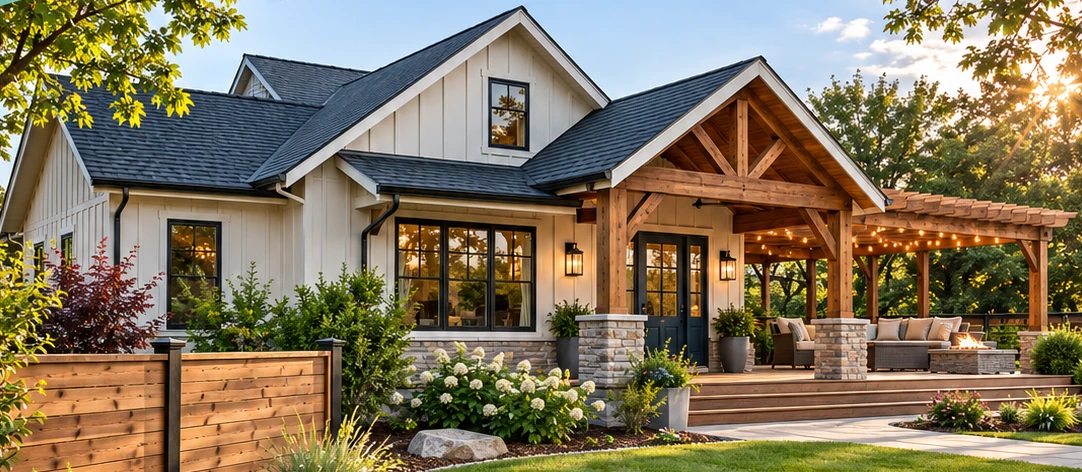
A great exterior transformation can make a house feel fresh before anyone walks through the front door. New siding, a roof refresh, updated trim or a thoughtfully designed patio may change the way a property looks and the way its owners enjoy it.
Appearance matters. But an exterior improvement also creates an opportunity to think about how the home functions. Durability, weather exposure, maintenance requirements, drainage and energy performance can influence which choices make sense over time.
The goal isn't to turn every beautiful project into a complex energy retrofit. It's to notice when practical improvements should be considered alongside the visual ones.
Begin with the feeling you want to create
Some homeowners want a clean, modern appearance. Others are looking for warmer, more traditional details or a backyard that feels connected to the living areas inside. Consider which parts of the property matter most: the front elevation, the entry, the patio, the deck, the landscape edges or the materials surrounding the house.
A useful design conversation starts with the whole property and then narrows toward the details. This can help avoid choosing individual products that don't work well together.
Siding changes more than color
Siding is one of the most visible elements of a home's exterior. Profiles, texture, color and trim can dramatically change the architecture. But siding also sits within an assembly designed to manage weather exposure.
As you evaluate replacement or repair, ask about the condition of existing materials, relevant flashings, openings, and the details at roof and foundation transitions. The project may be a good time to consider whether there are related building-envelope concerns worth addressing while surfaces are accessible.
Better planning may prevent the need to revisit finished areas for unrelated work soon afterward.
A roof is both a design element and a protective system
Roof color and material choices influence a home's visual character, particularly where the roof is prominent from the street. Yet a roof is primarily a protective system. Appropriate materials, flashings, penetrations, ventilation and drainage details matter as much as its appearance.
If a roof replacement is part of the plan, consider whether gutter work, selected attic or ventilation questions, or adjacent siding details should be discussed at the same time. Those connections do not mean every house needs every upgrade. They simply deserve consideration before the work is scheduled.
Energy performance may be easier to discuss during renovation
Exterior work can sometimes expose or improve access to building details that are ordinarily concealed. Depending on the project, this may create an opportunity to discuss air sealing, insulation or other comfort-related improvements.
The right approach depends on actual construction conditions. An older home may have different needs and constraints than a newer one, and the benefits of additional work should not be assumed without evaluation.
A careful conversation helps separate practical options from unnecessary add-ons.
Drainage belongs in exterior design
Patios, walkways, planting areas and hardscapes affect the way a yard is used and may affect how surface water moves. Roof runoff and downspout discharge also matter.
An attractive plan should not send water toward vulnerable parts of the home or create new drainage problems. The details vary with the property, but treating water management as part of early planning is often more sensible than addressing it after the finishes are installed.
Outdoor living extends your everyday space
A deck, pergola, patio or outdoor kitchen can create a place to gather, cook, rest or enjoy the yard. Think about what happens on a typical day, not only during a special occasion. Does the space need shade? Is there a convenient path from the house? How will the furniture fit? What maintenance will materials require? How will rainwater be handled?
These practical questions influence how enjoyable the project will be long after the first photographs are taken.
When planning multiple outdoor features, a coordinated approach to material choices, pathways, fences, elevations and utilities may produce a more cohesive result than independent decisions made at different times.
Don't confuse inspiration with an actual project specification
A beautiful reference photo can clarify your preferences, but it may show materials or construction details that are unsuitable for your property or budget. The local climate, site, applicable codes, HOA rules and existing structures all influence what's possible.
Use inspiration images to start a conversation. Ask what would need to change to make the idea appropriate for your home.
Consider sequencing before committing
If you're thinking about siding, roofing, insulation, drainage and outdoor construction, ask whether certain tasks should occur before others. Planning can help reveal shared access requirements, protection needs or opportunities to avoid reworking newly finished areas.
A good project plan makes the scope understandable. It should outline what is included, any necessary assessments or permits, and the next decisions needed from the homeowner.
Keep beauty and performance in the same conversation
Curb appeal and comfort don't have to compete. A home can feel welcoming while being thoughtfully protected and easier to live in. The best improvements are those that address the homeowner's priorities with materials, details and planning suited to the property.
Everwell Home Co. serves Dallas–Fort Worth homeowners with roofing, siding, insulation, moisture management, decking, fencing, hardscapes, patios, designer masonry, outdoor kitchens and other home-improvement services. Whether your goals are practical, visual or both, a consultation can help bring them into focus.
This article is general educational information, not a substitute for a property-specific professional evaluation.