Home Comfort & Energy Efficiency
Why Some Rooms in Your Home Feel Hotter Than Others
A closer look at insulation, air leakage, ventilation, and other reasons a room may never feel quite right.
 Everwell Home Co. ·
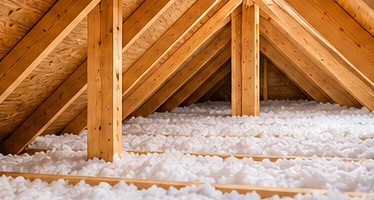
If one room in your house always feels warmer than the rest, you're not alone. Uneven temperatures are a common source of frustration, especially through the warmer months in Dallas–Fort Worth. The thermostat may report a comfortable number while one bedroom still feels stuffy and another feels cool.
It's tempting to blame a single product or assume the heating and cooling system must be replaced. But a home's comfort is influenced by several interacting factors, including insulation, air movement, sunlight, ventilation and how conditioned air reaches different rooms. Understanding those relationships can help you ask better questions and consider improvements in a sensible order.
Insulation influences how heat moves
Insulation helps resist heat moving through building assemblies, including ceilings, walls and floors. When areas have inadequate coverage, gaps or damaged material, the performance of those assemblies may be different from what the homeowner expects.
Attics deserve particular attention in North Texas because roof surfaces and attic spaces can experience intense solar heating. Rooms beneath a hot attic may be uncomfortable if the building assembly does not adequately resist heat transfer. However, simply adding insulation without looking at the existing conditions may overlook air leaks, ventilation questions or other problems.
Walls also differ. A bedroom with more exterior wall exposure may respond differently from an interior room. The materials, insulation and orientation of the house influence what is happening inside.
Air leaks can create drafts and unexpected temperature changes
Insulation and air sealing serve different purposes. Insulation primarily resists heat flow. Air sealing addresses pathways that let air move unintentionally between spaces.
Gaps around certain penetrations, framing connections and attic openings may allow conditioned air to escape or warmer, dustier air to enter. These pathways can be easy to overlook because they may be concealed behind finishes.
Air sealing is not the same as eliminating ventilation. Homes need appropriate air exchange, and changes should account for ventilation and safety, including any combustion appliances where applicable. The right approach should consider how the whole home functions.
Sunlight can make two similar rooms feel very different
Two bedrooms on opposite sides of a house may receive very different amounts of direct sun. Window size, orientation, glass properties and exterior shade can influence how much heat a room gains during the day.
A west-facing room may heat up later in the afternoon, even when the home has otherwise reasonable insulation. Window coverings, shading strategies and the condition of the building envelope may deserve consideration along with other comfort factors.
This is one reason a homeowner's description of when a room gets uncomfortable can be useful. A pattern tied to a particular time of day may suggest a different set of questions than a room that is uncomfortable all night.
Ventilation and HVAC distribution also matter
A home can be reasonably insulated and still have room-to-room differences. The location and condition of supply and return pathways, equipment operation, room layout and air distribution may contribute.
Attic ventilation is another topic that sometimes enters the discussion, particularly when the attic contains or adjoins important portions of the conditioned building envelope. Ventilation strategies depend on the roof assembly and climate, so recommendations should be specific to the house rather than copied from a generic checklist.
Everwell offers ventilation-related and thermal assessment services. That does not mean every room-comfort problem can be diagnosed without appropriate inspection or, where necessary, a qualified specialist.
Moisture can complicate home performance
Water concerns are not necessarily the reason for an uneven temperature, but moisture conditions should not be ignored in a home-performance discussion. Damp insulation, unwanted water intrusion, or materials affected by leaks may require attention before improvements are covered or closed in.
An insulation project should not conceal an active leak. Likewise, sealing a space without understanding water or ventilation conditions may create different problems. Good sequencing matters.
What information should you collect before calling?
You don't need to conduct a technical inspection to begin a useful conversation. A few observations can help:
- Which rooms are uncomfortable, and at what time of day?
- Does the problem change with the season or recent weather?
- Are there noticeable drafts, unusual attic conditions or visible insulation gaps?
- Have there been prior roof leaks, moisture problems or recent renovations?
- Do doors stay closed, and does the room receive direct afternoon sunlight?
These observations are not a diagnosis. They simply help describe the concern clearly.
How to choose a practical next step
The right answer depends on the property. Some houses may benefit from better attic insulation. Others may have air-sealing opportunities, ventilation questions, building-envelope concerns or mechanical distribution issues that deserve separate attention.
A home-performance consultation can help identify which questions to investigate first. The goal should not be to sell the largest possible package; it should be to understand the reason for the discomfort and decide whether a particular improvement is appropriate.
Everwell Home Co. offers attic and wall insulation, air sealing, weatherization, radiant-barrier options, ventilation-related services and thermal assessments, along with related moisture and exterior improvements. Services and diagnostic scope should be confirmed for the specific property.
This article is general educational information, not a substitute for a property-specific professional evaluation.